
Tree Removal Permits in Kissimmee Start With Your Jurisdiction
The first step is not measuring the tree. It is confirming which government regulates your address. A Kissimmee mailing address does not mean you live inside the City of Kissimmee, and plenty of homes with a Kissimmee address sit in unincorporated Osceola County. Around our service area, the main possibilities are:
- City of Kissimmee for lots inside city limits, including much of the area around downtown and Lake Toho.
- City of St. Cloud for lots inside St. Cloud city limits.
- Unincorporated Osceola County for places like Buenaventura Lakes, Celebration, Harmony, Narcoossee, ChampionsGate, Reunion and much of Poinciana and Four Corners.
- Unincorporated Orange County for Hunters Creek and Meadow Woods, just north of the county line.
Your property tax bill or the county property appraiser's record will usually show which taxing district applies. If you are unsure, send us the address and we will look it up as part of your estimate.
City of Kissimmee Tree Removal Permit Rules
The City of Kissimmee lists a Site Development and Tree Removal permit among its permit types. According to the city's permit page, it covers debrushing and tree removal that is not part of a construction project, and it also covers a request to remove a tree. The city's Land Development Code contains its tree protection rules, which set which trees are regulated, what exemptions exist, and when replacement is required.
We have seen several third-party summaries quote specific diameter thresholds and exemptions for Kissimmee, and they do not agree with each other. Rather than repeat numbers we cannot confirm, our advice is simple: before removing a healthy tree inside city limits, ask the city's development services staff whether your tree and lot need a permit, and get the answer in writing if you can.
St. Cloud Tree Removal Permit Requirements
St. Cloud's tree removal permit page currently states that tree removal permits are required only for commercial properties. Applications are handled through the city's online permitting portal or in person at the St. Cloud Civic Center on 17th Street, and the page links to Florida Statute 163.045 for residential owners. If you own a home in St. Cloud, that is good news, but rules change, so confirm with the city before a large removal, especially on a lakefront lot or one that borders a conservation area.
Osceola County Tree Removal Permits in Unincorporated Areas
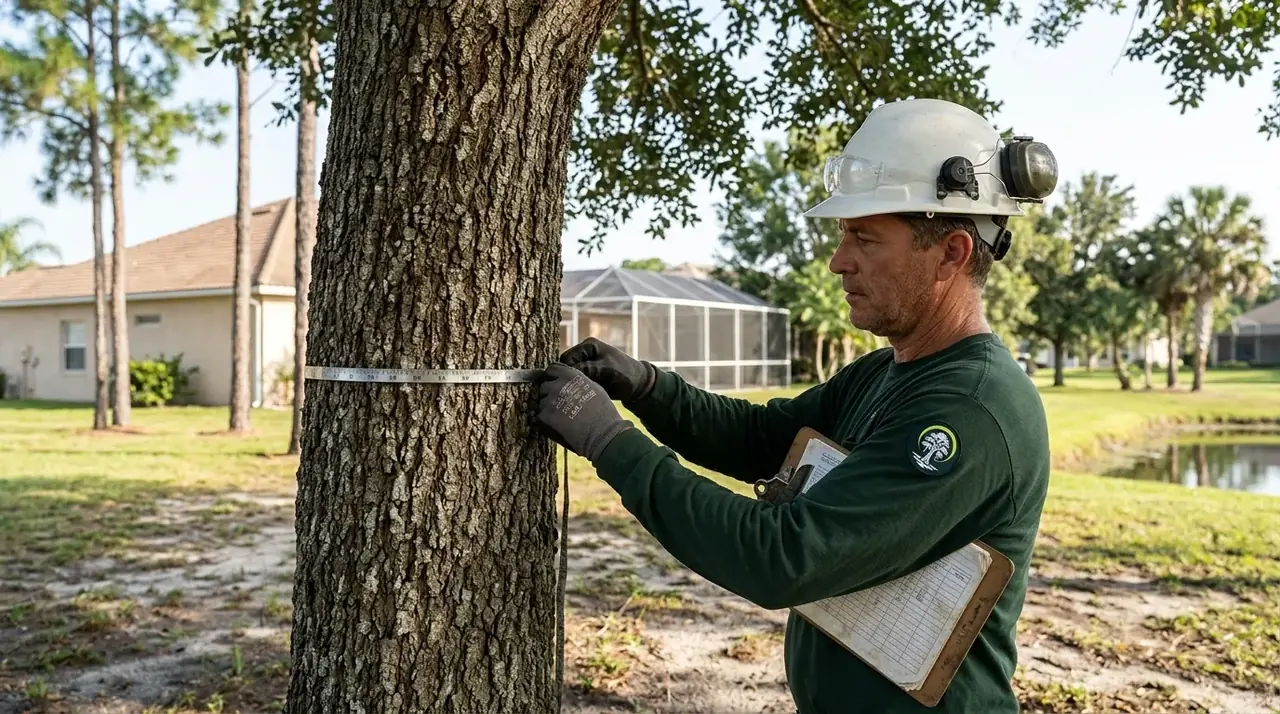
Osceola County's Land Development Code covers trees in Chapter 4, Article 4.8, titled Landscape, Streetscape, and Treescape. Section 4.8.1(B) says a development permit, land clearing authorization or tree removal permit is required before activity on a site, and then lists exemptions. Those exemptions include removing naturally fallen vegetation and removing Category I invasive species, among others.
The county does enforce this section. A 2025 code enforcement case posted on the county's website cited Section 4.8.1(B) against a condominium association in Kissimmee. How the section applies to one tree in the backyard of an existing single-family home is a question for the county's Development Review staff, and we recommend calling them before removing a healthy tree in places like Buenaventura Lakes, Narcoossee or Harmony.
Orange County Tree Removal Rules for Hunters Creek and Meadow Woods
Orange County publishes its rules more plainly than most. Its tree removal permit page says a permit is required for single-family or duplex property over two acres with an occupied home, and for any vacant or undeveloped property regardless of size. That means most typical Hunters Creek and Meadow Woods home lots, which are well under two acres, fall outside the permit requirement for removal on an occupied lot.
The county also lists an exemption for clearing the building pad, driveway, septic system and 15 feet around the house when a building permit has been approved. Its posted fee for a single-family or duplex lot over two acres is $121, with possible review and mitigation fees on top. If you live in Hunters Creek, your HOA is the more likely hurdle.
| Jurisdiction | What to check first |
|---|---|
| City of Kissimmee | Ask development services whether your tree needs the Site Development and Tree Removal permit |
| City of St. Cloud | City page says permits are for commercial properties only; confirm for unusual lots |
| Unincorporated Osceola County | LDC Section 4.8.1(B) and its exemptions; call Development Review |
| Unincorporated Orange County | Permit for occupied lots over two acres or any vacant lot |
| Any HOA or resort community | Architectural review approval under your covenants |
Dead, Fallen and Invasive Tree Removal Around Kissimmee
Permit rules mostly aim at healthy, living trees. A tree that a storm has already knocked over is a different situation in many codes. Osceola County's exemption list, for example, includes removing naturally fallen vegetation and removing Category I invasive species. That second exemption matters here, because camphor and Brazilian pepper, two of the invasive trees we remove most often, are on the Florida Invasive Species Council's Category I list.
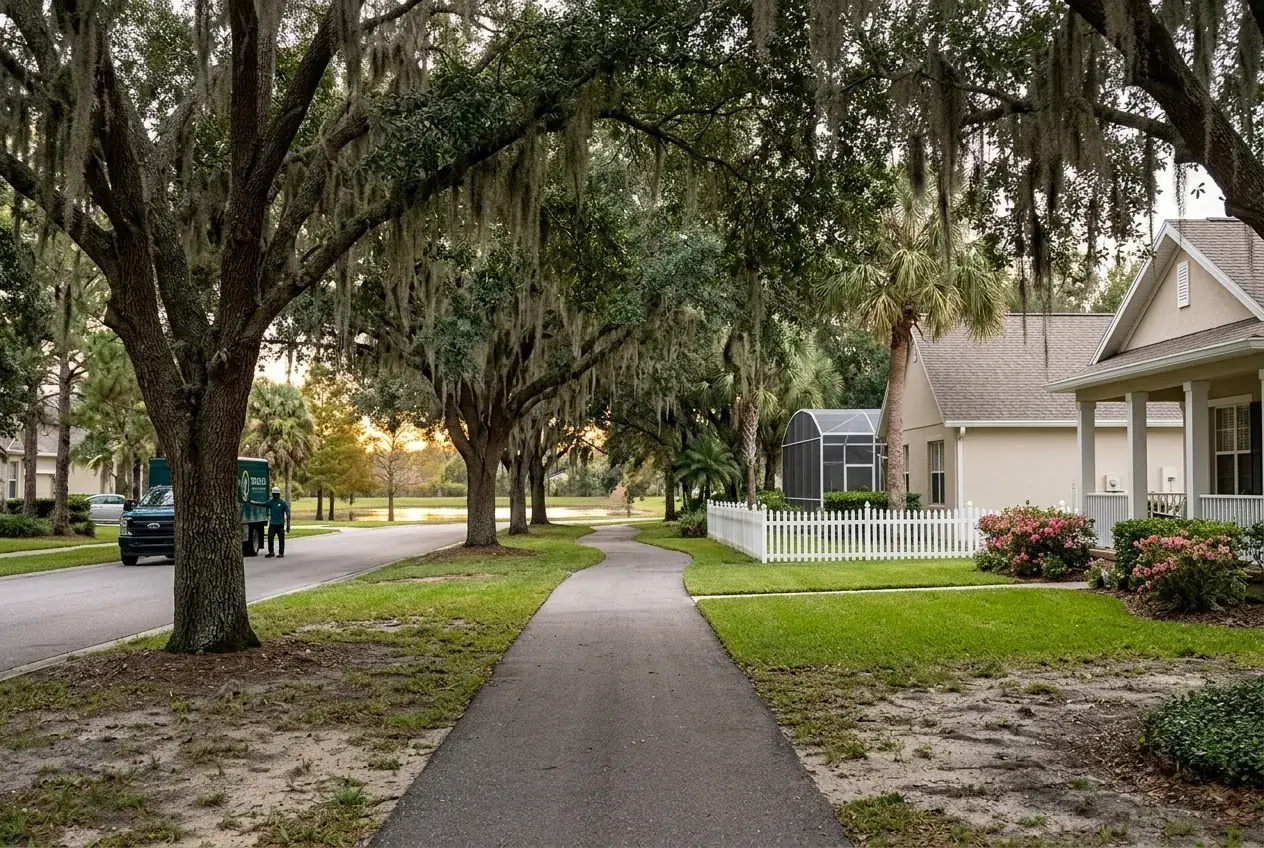
Standing dead trees are less clear-cut. Some codes treat them as exempt, some want a quick inspection, and the state law above covers them only if you have the risk documentation it describes. Take dated photos of a dead tree before it comes down. If anyone asks questions later, those photos are your best record. And if a dead tree is leaning toward your house, safety comes first and paperwork second.
Florida Statute 163.045 and Hazardous Tree Removal
Florida Statute 163.045, first passed in 2019, limits what cities and counties can require when a tree on a home lot is dangerous. In 2022 the Legislature tightened its wording. As it reads now, a local government may not require a notice, application, approval, permit, fee or mitigation to prune, trim or remove a tree on residential property if the owner has documentation that the tree poses an unacceptable risk to persons or property. It also may not require you to replant.
The details matter. Documentation means an onsite tree risk assessment, signed by an ISA certified arborist or a Florida licensed landscape architect, done under the ISA's tree risk assessment best practices. A tree qualifies when removal is the only practical way to bring its risk below moderate. Residential property means a detached single-family home on a lot used for single-family purposes, so condos, townhome common areas and commercial sites are outside it.
HOA Tree Removal Approval in Celebration, Harmony and Reunion
Many of the master-planned and resort communities around Kissimmee have architectural review rules that cover tree removal, replacement trees and sometimes even pruning of street trees. In Celebration, Harmony, Reunion and ChampionsGate, plan on submitting a request before work starts. Requirements differ by association, so we do not guess. Ask your manager for the current form, and expect questions about the reason for removal, the tree's location and what you plan to plant in its place.
Kissimmee Tree Permit Checklist Before Work Starts
- Confirm whether your lot is in the City of Kissimmee, St. Cloud, unincorporated Osceola or Orange County.
- If the tree is healthy, ask the right office whether a permit applies and keep the answer.
- If the tree is hazardous, consider getting a signed arborist risk assessment under 163.045.
- Submit any HOA architectural review request and wait for written approval.
- Keep photos of the tree before removal, especially if it was dead or storm-damaged.
Once the paperwork is clear, our tree removal crew can schedule the job. If a tree is already on the house after a storm, call for emergency tree removal first and sort out the paperwork after everyone is safe. For a sense of the budget, see what tree removal costs in Kissimmee.