
Hurricane Ian in Osceola County: What Actually Happened
Ian made landfall in southwest Florida on September 28, 2022, and then crossed the peninsula. Local news reported the storm entering southern Osceola County as a Category 1 hurricane. By the time it moved out, county officials said Osceola had received more than 15 inches of rain. A National Weather Service meteorologist in Melbourne cited a total of 15.65 inches at Campbell, just southwest of Kissimmee, and NOAA's September 2022 climate report listed Osceola among the counties with some of Ian's largest rainfall totals.
Rain falling on Osceola was only part of the problem. Water from Orange County kept draining south along Shingle Creek, Boggy Creek and Reedy Creek for days. County leaders named Shingle Creek, parts of Buenaventura Lakes and parts of Poinciana among the worst-flooded areas. The City of Kissimmee issued a voluntary evacuation for Shingle Creek Reserve at The Oaks, and 37 people were evacuated from a Good Samaritan Society retirement community in Kissimmee with an airboat on standby. A county commissioner said water levels were the highest he had seen in his lifetime.
Why Hurricane Ian Flooding Lasted So Long in Kissimmee
The creeks that run through Kissimmee are part of a much bigger drainage system. Shingle Creek, Boggy Creek and Reedy Creek collect water from the Orlando area to the north and carry it south toward Lake Toho and the chain of lakes that feeds the Kissimmee River. After Ian, that whole system was full at once. A county commissioner said officials worked with the South Florida Water Management District to fully open the locks so water could drain out of the county, and leaders warned that creek levels could keep rising even after the rain had stopped.
For trees, the length of the flooding mattered as much as the depth. Roots in standing water run short of oxygen within days. Lawns, retention pond banks and low back yards along the creeks stayed soft long after the sun came out, and that softness is exactly what lets a heavy canopy pull a root plate loose.
Saturated Soil Is Why Kissimmee Trees Uproot
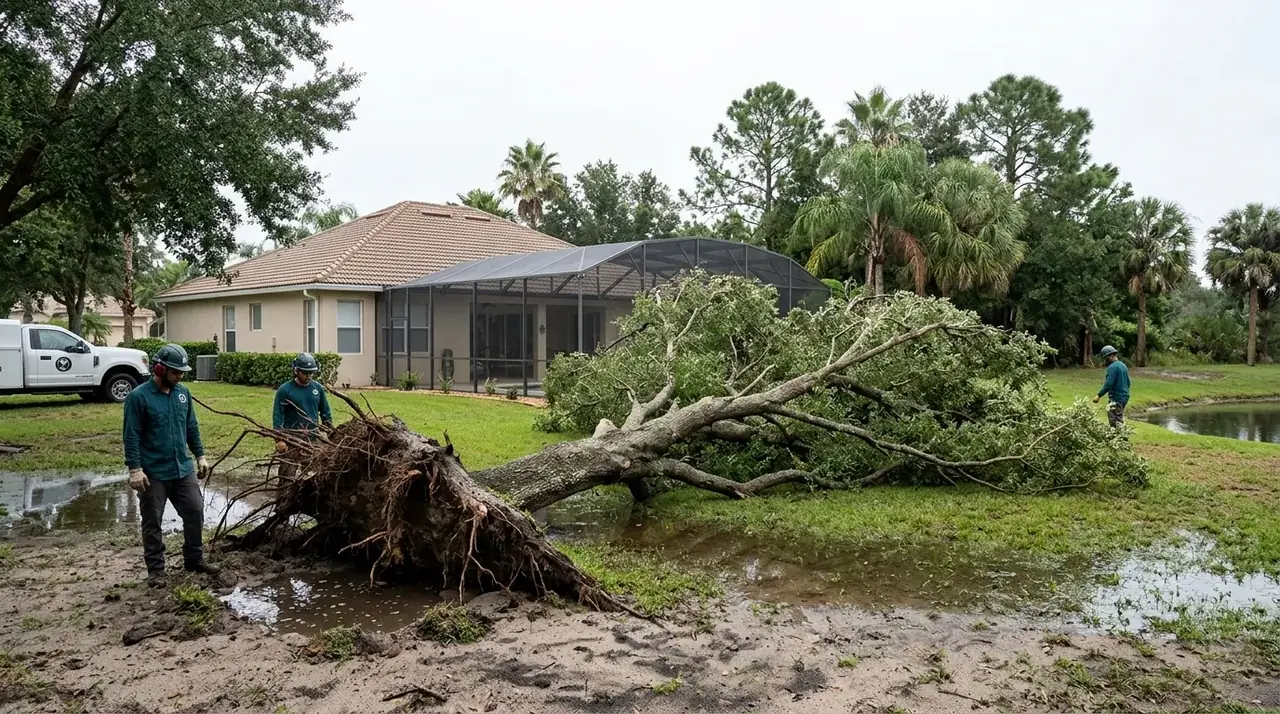
Most of our service area sits on flat pine flatwoods with sandy soil and a high water table. Roots do not grow deep where the ground stays wet, so many trees here stand on a wide, shallow plate of roots rather than a deep anchor. UF/IFAS woody plant researchers note that saturated soil lets roots slide in the soil, making trees very unstable, and that the problem is worst where soil is shallow or the water table is high. One UF/IFAS example describes a large tree with few roots deeper than about 12 inches because of the water table.
Put those facts together and you get the classic Osceola County storm failure: a whole tree tipped over with a disk of roots and sand standing on edge, often without a single broken limb. It does not take hurricane-force wind to do that when the ground has been soaking for days. That is why a yard can look fine through the strongest gusts and then lose a tree to a squall a day or two later.
Which Florida Trees Fail in Hurricanes, According to UF/IFAS
UF/IFAS researchers studied how more than eighty tree species held up after a long list of hurricanes, from Andrew in 1992 through Charley, Frances, Ivan, Jeanne and Dennis in 2004 and 2005. Charley is the one longtime Kissimmee residents remember, since it crossed Osceola County. Ian is not part of that research, but the findings line up with what homeowners here see after any big storm.
| UF/IFAS wind resistance group | Species common around Kissimmee |
|---|---|
| Highest | Live oak, southern magnolia, crape myrtle, bald cypress, pond cypress |
| Medium-low | Slash pine, longleaf pine, red maple, camphor |
| Lowest | Laurel oak, water oak, Washingtonia (Washington fan) palm |
| Top survivor noted in the text | Sabal (cabbage) palm |
The lowest group is the one to pay attention to. Laurel and water oaks were planted heavily in Central Florida neighborhoods and grow fast, but they are often decayed inside by the time they reach full size. Pair a weak tree with a soaked root plate and a roof within reach, and you have the trees we are most often called to remove after storms. Live oaks and sabal palms, on the other hand, are the trees most likely to still be standing.
Storm Damage Cleanup Lessons From Kissimmee Neighborhoods
Flooded streets slowed everything after Ian, and that will happen again. A few lessons apply to any homeowner, whether you are near Downtown Kissimmee and Lake Toho, in Buenaventura Lakes or out in Poinciana:
- Do not wade through floodwater to reach a fallen tree. Downed lines can be hidden under it, and the water itself carries risks.
- Photograph damage from a safe spot before anything is moved. Your insurer will want to see it as it was.
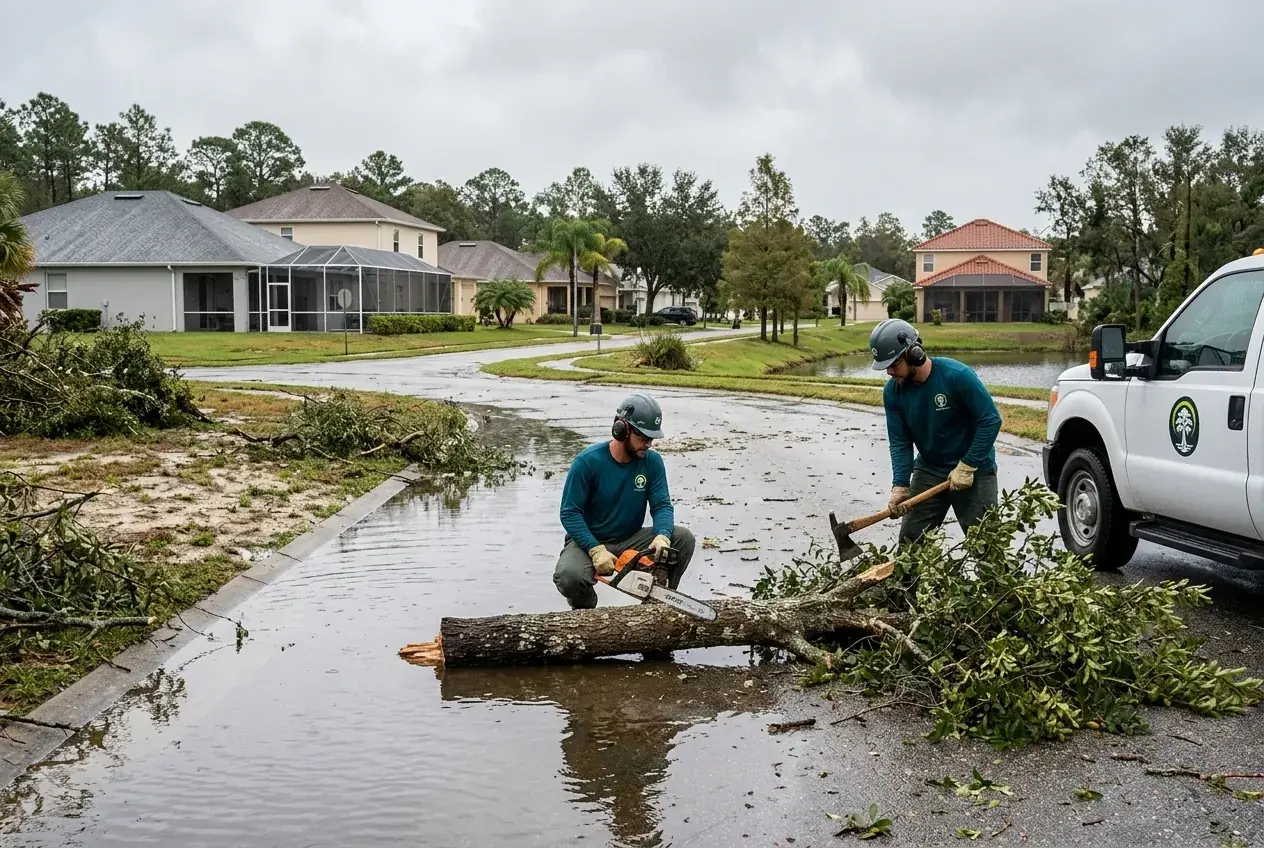
- Leave chainsaw work on leaning or hung-up trees to professionals. Wood under tension can snap unpredictably.
- Expect delays on equipment when ground is soaked. Heavy machines sink and tear up yards, so crews may need hand methods.
- Keep an eye on trees that stood in water for days. Decline can show up months later.
Our storm damage cleanup crews handle fallen trees, hangers and debris after storms. When a tree is on the house, we photograph it for insurance before cutting, then remove it in pieces to avoid more damage.
Checking Your Trees After the Water Goes Down
Once the ground firms up, walk the yard and look at every large tree from a few angles. Things to note:
- Cracks or raised soil on one side of the trunk, which can mean the root plate has started to lift.
- A new lean, even a slight one, compared with older photos.
- Broken or hanging limbs stuck in the canopy above roofs, driveways or play areas.
- Exposed or torn roots where water washed soil away along a pond bank or swale.
- Thinning or yellowing leaves in the weeks that follow.
Any of those is worth a professional look. A tree with a lifted root plate can often still be standing a month later and then go over in the next afternoon thunderstorm.
Hurricane Tree Prep for Osceola County Homes
Most storm failures come from trees with problems that were visible beforehand: dead limbs, cracks, decay at the base, roots cut by a driveway or pool project, or a lean that has gotten worse. Pre-season hurricane tree prep focuses on those weak points, along with limbs over the roof and pool cage. Good prep means thinning and removing defects, not shearing a tree into a lollipop shape, which tends to produce weak regrowth.
- Have trees inspected before peak season, ideally in late spring.
- Remove dead wood and limbs hanging over roofs, cages and driveways.
- Consider removing laurel or water oaks with decay that sit within reach of the house.
- Support valuable trees with weak forks using tree cabling and bracing where it makes sense.
- Do not pile fill dirt or new pavers over the root zone of a mature tree, since root damage weakens anchorage.
Replanting After a Storm in Kissimmee
When a tree comes down, it is tempting to plant whatever grows fastest. The UF/IFAS research points the other way. Live oak, southern magnolia, bald cypress near wet areas and sabal palm all ranked well for wind resistance and suit our soils. Give new trees room away from the house, the pool and lines, and keep them away from spots where water sits for days. Choosing where a tree goes is the cheapest storm prep there is.
If you are weighing a removal before next season, our guides to tree removal cost in Kissimmee and tree removal permits will help you plan.