
Kissimmee · Osceola County, FL
Storm Damage Tree Cleanup in Kissimmee After Hurricanes
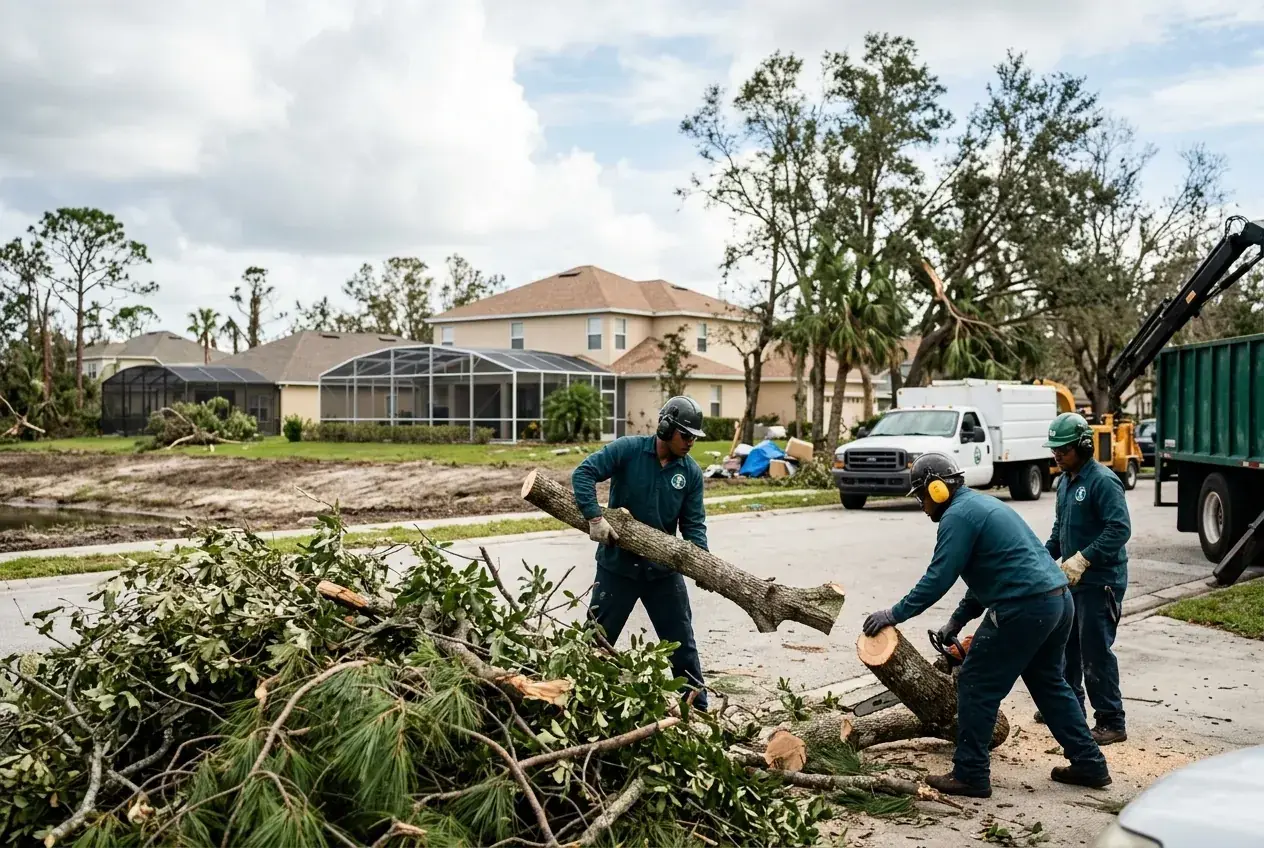
After a hurricane or tropical storm moves through Osceola County, we clear broken tops, hanging limbs and uprooted trees, document every step for your insurer, and sort the debris the way county and city crews require for pickup.
Storm Damage Cleanup Kissimmee Homeowners Can Plan Around
A named storm leaves a very different mess than a single fallen tree. Instead of one problem, you might have a pine snapped halfway up, two oak limbs hanging in the canopy, a sabal palm leaning into the fence, and a yard buried in leaves and branches. Our storm cleanup work is about sorting that out in the right order: dangerous hangers and anything on a structure first, then leaning and uprooted trees, then the cleanup and debris. If a tree came through your roof during the storm, start with our emergency tree removal line and we will roll the rest of the yard into the same visit.
Osceola County has seen this repeatedly. Hurricane Charley crossed the county in 2004, Irma brought widespread tree damage in 2017, and Milton in 2024 knocked down trees across Central Florida. Ian in 2022 was mostly a rain event here, with historic flooding along Shingle Creek and in parts of Kissimmee, Buenaventura Lakes and Poinciana, and it showed how much water the ground around Lake Tohopekaliga can hold. Our write-up on what Ian taught Osceola County about trees goes deeper.
Kissimmee Storm Damage Cleanup: What It Covers
- Removing hangers, the broken limbs caught in the canopy that can drop days later without wind
- Cutting and removing snapped trunks and tops, including pines broken high up
- Taking down uprooted or badly leaning trees whose root plates tore loose in wet soil
- Pruning storm-torn branch stubs back to clean cuts so the tree can seal the wound
- Clearing limbs off fences, sheds, screen enclosures and play sets
- Hauling debris away, or staging it at the curb in separated piles if you prefer county pickup
- Photographs and an itemized invoice for each tree, ready for your insurance claim
Palms usually ride out wind better than oaks, but storms still leave work behind. Sabal palms shed fronds and may lean in soft ground, queen palms often snap their spears or crowns, and tall Washingtonia palms can drop heavy dead fronds onto roofs and lanais for weeks afterward. We check palm heads for broken crowns and clear the dead material, leaving the healthy green fronds the palm needs to recover. Our palm tree trimming crews handle that part of the cleanup.
Storm Cleanup in Kissimmee, FL on Saturated Ground
The biggest difference between storm damage here and on higher ground is the soil. Pine flatwoods soils are sandy, flat and slow to drain, and the water table near Kissimmee sits close to the surface in the wet season. When a hurricane adds ten or fifteen inches of rain on top of a wet August, roots lose almost all of their hold. That is why we see so many trees around retention ponds and creeks tip over whole, with a flat disk of roots and sand standing up on edge, instead of snapping.

An uprooted tree with its root plate partly lifted is under tension in ways that are not obvious. Cutting the trunk free can let the root plate drop back into the hole with enough force to injure someone standing near it. We cut those trees in a specific sequence and keep everyone clear of the plate. We also check the trees still standing next to it, because neighbors in the same soaked ground often have cracked roots and a fresh lean that was not there before the storm.
Hangers and hidden cracks
Broken limbs hung up in the crown are the hazard people overlook most. They can sit in place for days and then fall on a calm afternoon. After every storm, we walk the property looking up, not just down, and we use binoculars on tall pines and oaks to find cracks at branch unions and splits in the main trunk. Anything that looks likely to fail is removed or reduced the same visit.
Storm Damage Cleanup Cost Across Osceola County
Every storm-damaged yard is different, so we price each property after walking it. These ranges give a realistic starting point for the jobs we see most often after a hurricane passes near Kissimmee.
Most storm-hit properties have several problems, so the quote is usually built tree by tree and then totaled. If a large pine has to come down anyway, we often combine it with smaller hanger work on the same visit to save you a second trip charge. When your insurer is paying for part of the work, the itemized list makes it easy to separate covered items, like a tree on the house, from yard cleanup the policy may not include.
| Job | Typical range | What moves the price |
|---|---|---|
| Removing hangers and broken limbs | $200–$950 per tree | Height of the break and what sits underneath |
| Uprooted small tree, under 30 ft | $350–$900 | Root plate size and whether it rests on a fence |
| Uprooted or snapped medium tree | $900–$1,900 | Tension in the trunk and access through gates |
| Large storm-broken oak or pine | $1,900–$3,800+ | Crane need, soft ground, and debris volume |
| Staging debris at the curb instead of haul-off | Often 10–20% less | Volume and distance from the yard to the street |
Kissimmee Storm Cleanup Debris Rules and Storm-Chaser Warnings
After recent hurricanes, Osceola County and the City of Kissimmee told residents to keep vegetative debris separate from construction debris such as drywall, fencing and roofing, and warned that mixed piles may not be collected. Kissimmee also asked people to place piles near the curb but not in the road and not to bag yard debris. Keep piles clear of fire hydrants, mailboxes, power boxes and parked cars. Rules can change for each event, so check the county or city announcements after the storm. When you choose curbside staging, we stack piles to match the current instructions.
Every big storm also brings door-knockers from out of state. Florida's licensing agency, the Department of Business and Professional Regulation, notes that trimming or removing fallen trees does not require a state license, which is exactly why tree work attracts so many unvetted crews. Ask any company for a certificate of liability insurance, a written price, and a local address. Avoid paying the full amount before work starts, and be cautious of anyone pressing you to sign an assignment of benefits or similar paperwork on the spot. Roof, electrical and structural repairs do require a DBPR license, so hire those trades separately.
Storm Tree Cleanup in Osceola County: What Can Wait
Debris on open lawn can wait. A tree on a structure, a hanger over a walkway, or a trunk blocking access cannot. In the first day or two after a hurricane, power crews are working the main lines, and limbs tangled with wires must be left to them. If you only have leaves and small branches, a rake and the county pickup may be all you need, and we will tell you so. For trees that survived but look stressed, waiting a few weeks to prune is often smarter than cutting immediately, since some damaged canopy recovers. Before the next season, our hurricane tree prep service is the best way to shrink the next cleanup.
A word on doing it yourself: emergency rooms in Florida see a wave of chainsaw and ladder injuries after every hurricane. Cutting small limbs lying flat on the lawn is reasonable for a careful homeowner with eye protection and chaps. Anything under tension, anything above your head, and anything near a wire should be left to a crew with the right rigging. Running a generator in a garage or near open windows during cleanup is just as dangerous, so keep it outside and well away from the house.
Storm Damage Cleanup From Lake Toho to St. Cloud
We prioritize homes in our core area, including Downtown Kissimmee near Lake Toho, Buenaventura Lakes, St. Cloud, the open lots of Narcoossee, and Poinciana. Vacation-rental owners who cannot get to Florida after a storm can have us inspect and photograph the property for them through our vacation rental tree service. To get on the list, call or submit the quote request with a few photos.
Questions
Storm Damage Cleanup FAQ for Kissimmee Property Owners
Emergency removal is one urgent problem, like a tree on a roof, handled right away at any hour. Storm cleanup is the larger job after a hurricane or tropical storm: assessing every tree on the property, removing hangers and broken tops, taking down uprooted trees, and dealing with debris. We often do both, starting with the emergency and then cleaning up the rest of the yard.
Around Kissimmee, the ground is flat, sandy and holds water close to the surface, especially late in the rainy season. When a hurricane adds heavy rain to already wet soil, roots lose their grip and the whole tree tips with a shallow plate of roots and sand. Trees near retention ponds, creeks and lakes are especially prone. A tree that broke higher up usually had weak wood or decay instead.
After recent hurricanes, Osceola County and the City of Kissimmee hired contractors for curbside storm debris pickup. Residents were asked to keep vegetation separate from construction debris, avoid bagging yard waste, and set piles near the road without blocking it. Rules and schedules change with every event, so check official announcements. We can stage debris to match them, or haul it away entirely.
Take wide shots of the whole yard and close-ups of each damaged tree, where it fell, and anything it hit, such as a roof, fence, screen enclosure or car. Photograph the broken trunk or root plate too. Do this before cleanup starts if you can do it safely. We take our own dated photos before cutting and include them with an itemized invoice for your adjuster.
Be wary of crews who show up uninvited, demand full payment up front, or push you to sign paperwork on the spot. Ask for a certificate of liability insurance, a written price, and a local business address. Florida DBPR notes that removing fallen trees does not need a state license, so checking insurance and references matters even more. Report suspected fraud to DBPR or the Florida Attorney General.
Not always. When a tree tips over partway, the root plate can be holding the trunk under tension. Cutting the trunk can let the plate snap back into the hole or roll, and that can seriously hurt anyone nearby. Keep children and pets away from uprooted trees, and do not climb on them. We cut them in a planned order with everyone clear of the root plate.
Small, recently planted trees can sometimes be straightened and staked if the roots are mostly intact. Large trees that tipped in saturated soil almost never recover safely, because the roots that held them on one side are torn. Mature palms are an exception in some cases. We look at the root damage and tell you honestly whether it is worth trying.
It depends on how widespread the damage is. After a direct hit, every tree company in Central Florida has a long list. We handle trees on homes and blocked access first, then work through cleanup jobs in the order they come in. We give an honest estimate when you call, and we keep you posted if the schedule shifts.
Remove hazards right away: hangers, split limbs over the house, and broken tops. For trees that just lost leaves and small branches, it often pays to wait a few weeks. Many oaks push new growth, and you can see what actually died before deciding how much to cut. Over-pruning a stressed tree right after a storm can do more harm than good.
Yes. After storms we inspect rental properties for owners who are not in Florida, send photos of every damaged tree and structure, and give a written quote by email. Once approved, we coordinate access with the management company and send after photos when the work is done, so the home can return to guest-ready condition as quickly as possible.
Related
More Tree Services Around Kissimmee
After the storm, call one crew
Photos for the adjuster first, then the dangerous stuff, then the full cleanup.
Mon–Sat 7:00am–7:00pm (24/7 emergency line for storm work) · Licensed & insured